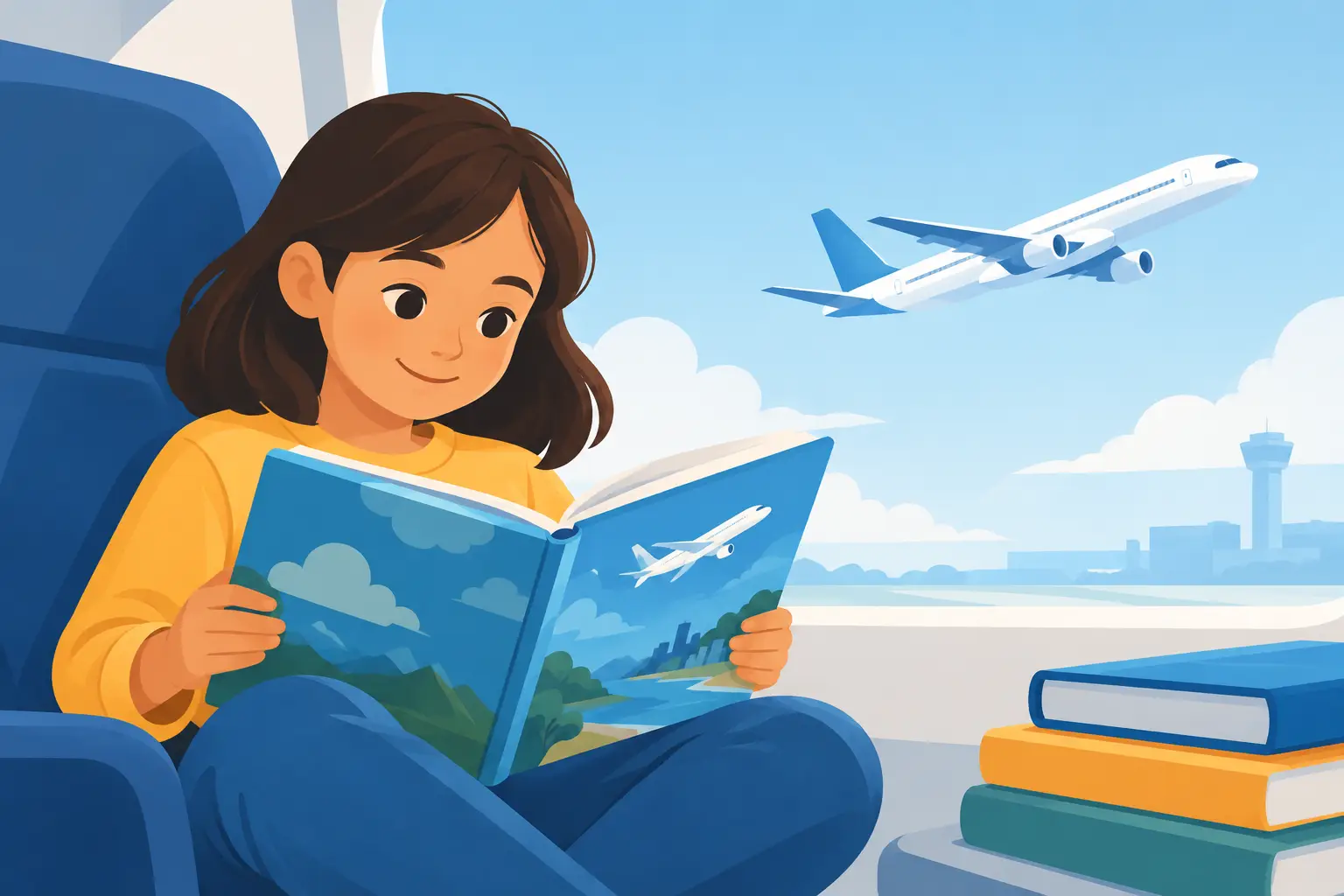
A child who has never met a pilot, engineer, airport planner, or operations controller may assume aviation belongs to someone else. Airline sponsored children’s books can change that assumption before it hardens. They place real aviation careers, diverse role models, and the purpose of flight into a format families, schools, and communities can share.
For aviation leaders, this is not a small public relations gesture. It is a long-term workforce, inclusion, and community investment decision. The sector is asking young people to see aviation as innovative, responsible, and open to their talent. Children need to see evidence of that invitation early.
Airline Sponsored Children’s Books Are a Strategic Investment
Airlines have long understood the value of connecting with passengers at moments that matter. Yet the relationship between an airline and the next generation should not begin only when a family buys a ticket. A well-produced children’s book gives an organization a place in the conversations that shape confidence, curiosity, and career aspirations.
This matters because aviation faces a talent challenge that cannot be solved through recruitment campaigns alone. Airlines, airports, maintenance organizations, and aviation authorities need future pilots, engineers, planners, dispatchers, safety specialists, digital experts, customer experience leaders, and sustainability professionals. Many of those future professionals are now in elementary school. Their interests are being shaped by what they encounter in classrooms, libraries, and at home.
A book can make the industry tangible. It can explain that a flight depends on far more than the people visible in the cockpit or cabin. It can show a young reader that someone monitors weather, maintains aircraft, designs terminals, coordinates baggage systems, studies fuel alternatives, protects wildlife near airfields, or leads a diverse team through operational decisions.
That visibility is particularly meaningful for children who have not had access to aviation networks. When characters reflect different genders, cultures, abilities, and family backgrounds, the message is clear: aviation needs your perspective. Inclusion becomes something a child can picture, rather than a statement in a corporate report.
From Corporate Social Responsibility to Workforce Readiness
The strongest community investments do not force a choice between social impact and commercial value. Airline sponsored children’s books are most effective when they serve both with integrity.
For a corporate social responsibility program, books can be distributed through schools, libraries, youth organizations, hospital programs, and community partners. They can reach underserved communities where career exposure is limited and where transport, science, technology, engineering, and mathematics pathways may feel distant. The distribution model matters as much as the book itself. A title that sits only in a premium lounge has a very different impact from one placed in the hands of children who may otherwise never see aviation as an attainable future.
For workforce strategy, the value is cumulative. A child does not read one story and immediately select an aviation degree. But early exposure can influence the subjects they choose, the questions they ask, the clubs they join, and whether they later recognize aviation as an industry where they belong. It builds familiarity well before an organization needs to recruit.
For brand leadership, the book becomes proof of a company’s values. A carrier that speaks about sustainable flight can introduce children to the people working on lower-carbon fuels, operational efficiency, and responsible airport design. An airline committed to women’s advancement can show girls women leading technical, operational, and executive teams. The story must be credible, however. Young readers deserve truth, not corporate slogans translated into picture-book language.
The Trade-Off: Visibility Is Not the Same as Impact
A co-branded book can be highly visible and still deliver little value if it lacks educational purpose. A logo on the cover does not make a publication meaningful. Nor does a one-time launch event prove a commitment to young people or inclusion.
Leaders should ask harder questions. Does the story accurately reflect aviation? Does it present a range of careers rather than repeating narrow stereotypes? Are the illustrations and language accessible? Will books reach communities beyond existing customers and employees? Is there a plan to measure distribution, engagement, and partner feedback?
There is also a practical balance to strike. The brand should be present enough for readers to understand who made the investment possible, but not so dominant that the book feels like an advertisement. Families, teachers, and community partners can recognize the difference immediately.
What Effective Airline Sponsored Children’s Books Include
The most valuable aviation books for young children combine imagination with operational truth. They make complex work understandable without flattening it into fantasy. A child can enjoy a story about preparing an aircraft for departure while also learning that safety, teamwork, and careful planning make flight possible.
Effective projects typically begin with a clear audience. A book for preschool children needs simple language, visual storytelling, and emotional familiarity. A book for early elementary readers can introduce broader roles, problem-solving, geography, environmental responsibility, and the science behind flight. Trying to speak to every age group often weakens the result.
Authenticity also requires subject-matter input. Aviation professionals can help ensure that terminology, processes, uniforms, equipment, and safety messages are accurate. This does not mean turning a story into a manual. It means respecting the profession enough to portray it well.
The best stories make room for purpose. They can show that aviation connects families, supports trade, helps communities during emergencies, and creates international understanding. They can also acknowledge responsibility: flying has an environmental impact, and the industry has work to do. Framing this honestly introduces young readers to the idea that progress depends on people willing to solve difficult problems.
Special North was created from this belief: children deserve to see what flying really looks like and to recognize the many pathways that can lead them into aviation. For sponsors, that creates an opportunity to support literacy and imagination while contributing to a more informed, representative future workforce.
Building a Partnership That Delivers More Than a Book
Before commissioning a title, sponsors should define the outcome they want to create. The goal may be early STEM engagement, stronger representation of women in aviation, community education, sustainability awareness, or a longer-term talent pipeline. More than one objective can coexist, but the story and distribution plan should be designed around priorities that are specific enough to guide decisions.
A meaningful partnership connects the publisher, sponsor, aviation experts, educators, and community organizations early. Educators can identify language and themes that resonate in classrooms. Community partners can advise where books will make a difference. Aviation teams can bring the story to life through career talks, airport visits, reading sessions, or age-appropriate learning activities.
Measurement should remain proportionate but real. Organizations can track copies distributed, schools and community partners reached, employee volunteer participation, event attendance, and feedback from teachers and families. Over time, they can assess whether the initiative has grown into mentorship, work-experience, scholarship, or youth engagement programs. The book is often the beginning of a relationship, not the final deliverable.
Regional context matters too. An airline operating across Asia-Pacific, the Middle East, and North America should not assume one story will resonate equally everywhere. The central message can remain consistent, while characters, examples, languages, and distribution partnerships reflect local communities. Global brands earn trust when their investment feels relevant on the ground.
A Leadership Decision With a Long Horizon
Senior leaders are often asked to justify community investments against immediate operational pressures. That is understandable in an industry shaped by economic cycles, infrastructure constraints, safety obligations, and decarbonization demands. Yet a future-ready aviation strategy cannot focus only on the next quarter.
The children reading today will inherit the sector’s unresolved challenges. They may become the engineers who improve aircraft efficiency, the leaders who build more inclusive workplaces, the planners who design resilient airports, or the innovators who advance sustainable aviation. Whether they consider aviation at all may depend on the stories placed in front of them now.
A thoughtfully sponsored children’s book will not solve workforce shortages or representation gaps by itself. It can, however, make a serious contribution to the conditions required for change: aspiration, access, visibility, and belief. When airlines invest in those conditions with courage and consistency, they do more than tell children that the sky is open to them. They help build the runway.
Leave a Reply